
How to Help a Dog With Car Sickness
If your dog turns every road trip into a drool-soaked, back-seat ordeal, you’re in good company. Car sickness is one of the most common travel complaints I hear about, especially with puppies. The good news is that it’s rarely serious, and most dogs learn to ride comfortably with the right setup and a little patience.
The short version: Skip big meals before the drive, keep your dog secured and facing forward, keep the car cool, and build up slowly with short, happy trips. If your dog still gets sick, talk to us about anti-nausea medication made for dogs.
Know the early signs
Vomiting is the obvious sign, but most dogs warn you first. Watch for heavy drooling, yawning or lip licking, whining or restlessness, and hunching over or sitting unusually still. A dog who balks at getting in the car at all is telling you something too. If you catch these signs early, you can pull over before things get messy.
Why it happens
Car sickness happens when what your dog’s eyes see doesn’t match the motion their inner ear feels. That mismatch triggers nausea, the same as it does in people. Puppies are especially prone because their balance systems are still developing, and many outgrow it by about a year old.
Anxiety often plays a part too. If early rides made a dog sick, or the car only ever led to the vet (we try not to take it personally), the car itself can become the trigger. A quick way to tell the difference: drooling and vomiting once the car is moving point to motion sickness, while panting, shaking or refusing to get in before you’ve left the driveway point to anxiety. Many dogs have a bit of both.
Eight ways to prevent it
- Go light on food. Skip a full meal for a few hours before the drive. Water is fine.
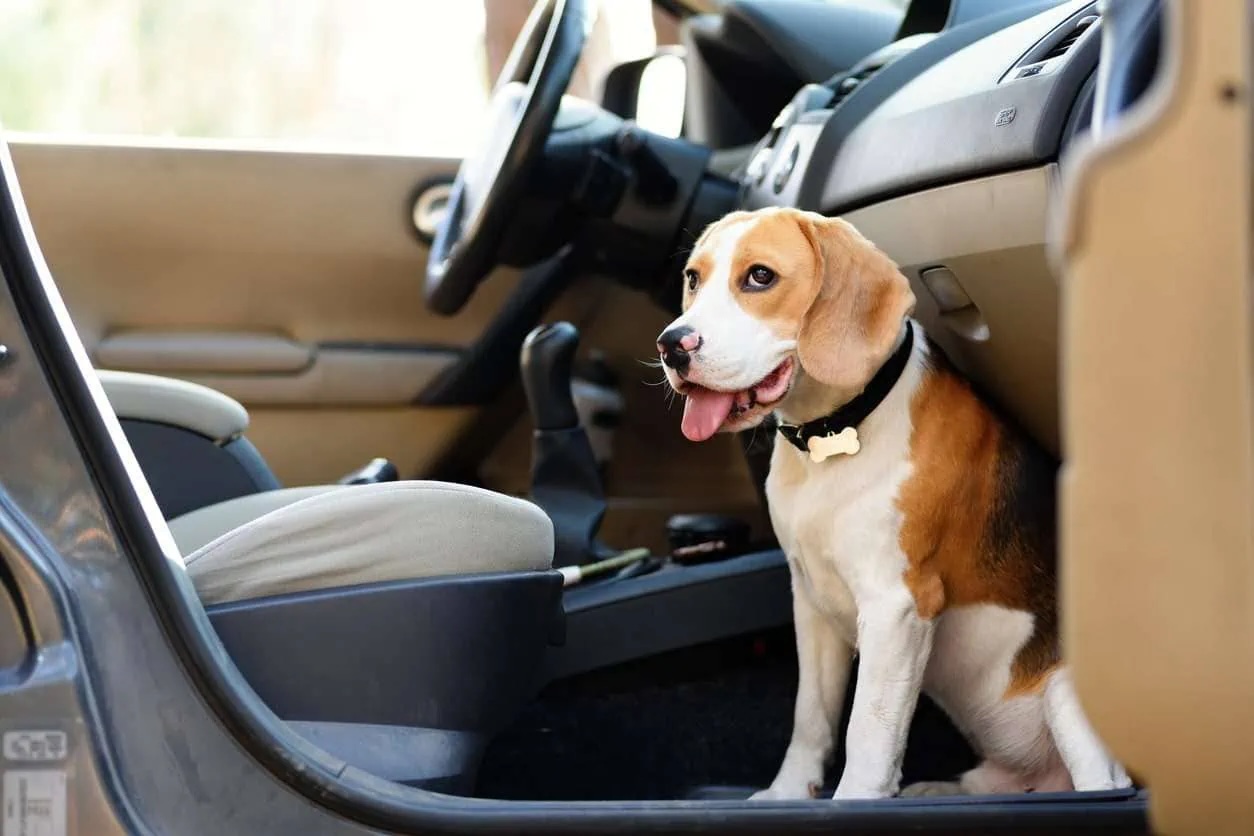
- Secure them, facing forward. A crash-tested crate or seat-belt harness keeps your dog from sliding around. Some dogs do better in a covered crate that blocks the view.
- Pick the middle back seat. It has the least sway.
- Keep it cool and fresh. Crack the windows an inch or two and skip strong air fresheners.
- Drive gently. Smooth braking and slower turns make a real difference.
- Start small. Begin with treats in the parked car, then a trip around the block, then short drives. Build up over days or weeks.
- Make the destination fun. End practice trips at a park or trail so the car predicts good things.
- Bring comfort and take breaks. A blanket that smells like home can ease nerves. On long drives, stop every couple of hours for a walk, water and fresh air.
When medication makes sense
If training and setup changes aren’t enough, medication can make travel comfortable again. Please never give your dog human medicine without checking with us first. Doses differ from people’s, and some ingredients are dangerous for dogs.
The most common option is maropitant (Cerenia), a prescription anti-nausea medication approved for motion sickness in dogs and given ahead of travel. Some dogs do well with an antihistamine like Dramamine or Benadryl, but only at a dose we give you. Avoid versions with added ingredients, such as decongestants, which can be dangerous. When fear is the main driver, anti-anxiety medication may help more. Calming aids like pheromone sprays or snug wraps have a milder effect and work best alongside training. Ginger is a traditional remedy, but the evidence in dogs is thin, so ask us about it first. We’ll recommend the right option based on your dog’s age, health, other medications and whether nausea or nerves is the bigger problem.
If your dog gets sick on the road
Pull over safely, let your dog out on a leash for fresh air, and offer a little water. Hold off on food until you arrive. Clean up with an enzyme cleaner so the smell doesn’t set off the next ride. Above all, stay calm, because scolding adds stress and makes things worse. For future trips, keep a car kit with old towels, a seat cover, paper towels, poop bags, water and a bowl.
When to call us
Call us if your dog vomits on most rides, is still getting sick after a few weeks of practice, or keeps vomiting after the trip is over. The same goes for vomiting that comes with lethargy, diarrhea or other signs of illness, which can point to something beyond motion sickness.
The bottom line
Most car-sick dogs improve with a few simple changes: a light stomach, a secure forward-facing spot, fresh air and short, happy practice trips. For the ones who need more help, the right medication can turn the car back into a place they love. Before long, your dog may be the first one waiting by the door when you grab your keys.